Health Effects of Poor Air Quality: Ultimate Guide
Introduction
Health effects of poor air quality are no longer a distant concern for Indian adults, parents, students, commuters, outdoor workers, fitness enthusiasts, and anyone worried about respiratory health. Across bustling metros and small towns alike, polluted air silently erodes lung capacity, fuels heart disease, and disrupts sleep. This guide explains the most pressing risks, backs each claim with a concrete Indian example, and shows exactly how you can act today to protect yourself and your family.

Long-Term Cardiovascular Risks from Chronic Air Pollution Exposure - health effects of poor air quality
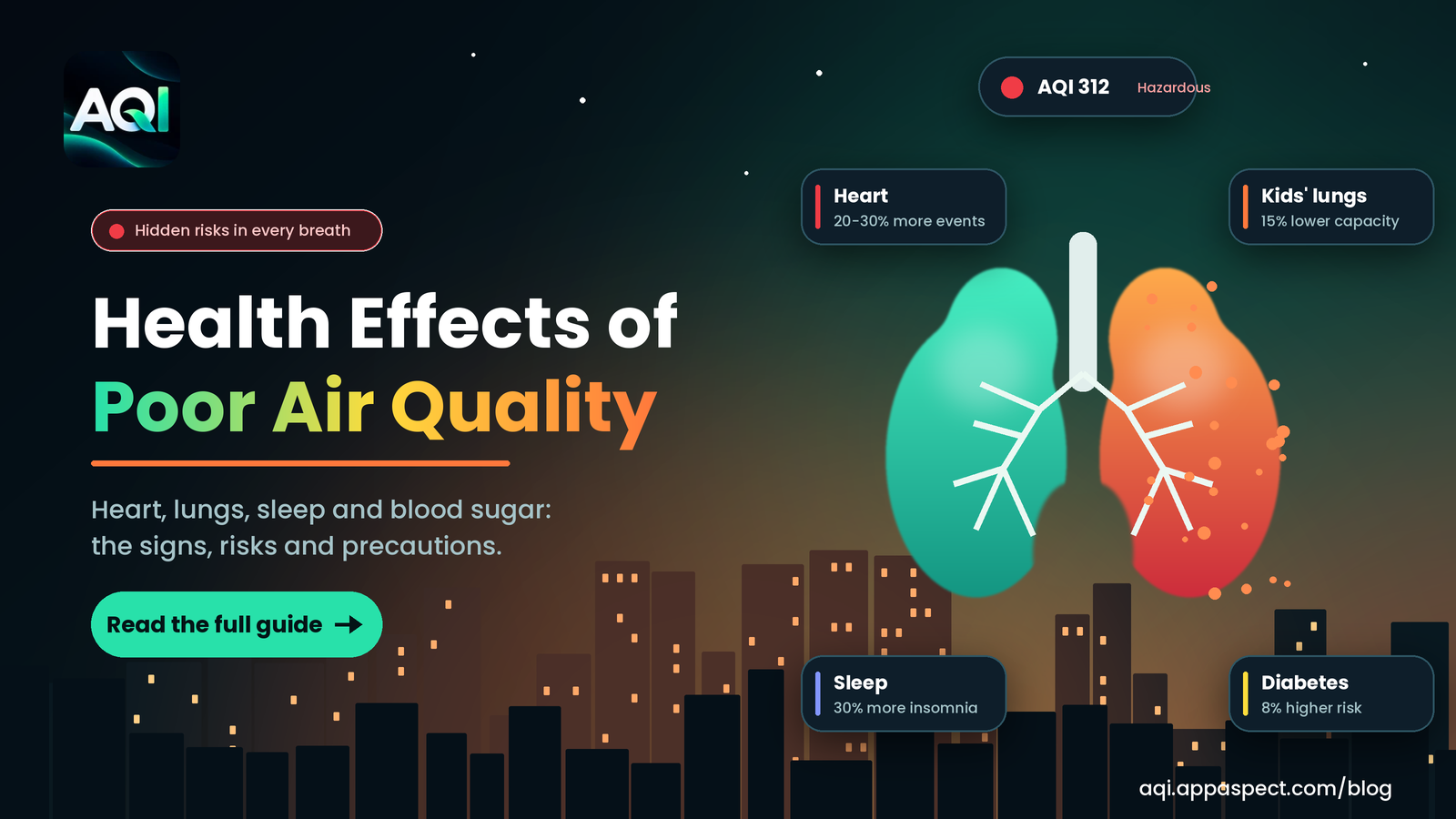
Chronic exposure to polluted air dramatically raises the odds of heart disease, stroke, and hypertension. Studies from the Indian Council of Medical Research link air quality and heart disease to a 20-30 % increase in cardiovascular events in cities where the AQI regularly exceeds 150.
In Delhi’s 2023 winter, a 45-year-old IT professional with a sedentary lifestyle experienced his first heart attack after a three-month stretch of AQI values above 200. The culprit was not just his diet; fine particulate matter (PM2.5) entered his bloodstream, inflamed arterial walls, and accelerated plaque buildup.
Why act now? Cardiovascular damage from airborne toxins is largely irreversible, but early mitigation can slow progression and reduce mortality.
Key mechanisms
- Inflammation - Particulate matter triggers systemic inflammation, a known precursor to atherosclerosis.
- Oxidative stress - Reactive oxygen species generated by pollutants damage endothelial cells.
- Autonomic imbalance - Poor air quality disrupts heart rate variability, increasing arrhythmia risk.
Practical steps
- Check the real-time AQI before commuting; choose routes with lower traffic density.
- Use a certified N95 mask on days when AQI > 150.
- Incorporate antioxidant-rich foods (berries, leafy greens) to combat oxidative stress.
Tip: Pair your daily AQI check with a brief 5-minute breathing exercise indoors; it reduces stress hormones that otherwise amplify cardiovascular strain.
Additional insight: research from the All India Institute of Medical Sciences shows that regular aerobic exercise performed indoors on high-AQI days can improve endothelial function by up to 12 %, offering a practical countermeasure for city dwellers.
Impact of Poor Air Quality on Children’s Lung Development - health effects of poor air quality
Children breathe faster and deeper than adults, making them especially vulnerable to air pollution health risks India. In a longitudinal study of 2,500 schoolchildren in Varanasi, researchers found that children living in zones with average PM2.5 > 80 µg/m³ had a 15 % reduction in forced vital capacity (FVC) by age 12, compared with peers in cleaner neighborhoods.
One concrete example: A 9-year-old boy in Pune, whose school sits beside a busy highway, was diagnosed with chronic bronchitis at age 7. His parents noticed that his lung function plateaued after each monsoon season, coinciding with spikes in particulate matter from construction dust.
Why protect kids now? Reduced lung capacity in childhood predisposes adults to chronic obstructive pulmonary disease (COPD) and lowers exercise tolerance, limiting future academic and career opportunities.
Actionable checklist for parents
- Monitor indoor AQI - Use an air quality monitoring app like AQI - Air Quality Index to receive location-based alerts.
- Create clean zones - Keep windows closed during high-AQI periods and run HEPA filters in bedrooms.
- Plan outdoor activities - Schedule sports and playtime for early mornings when AQI is typically lower.
- Advocate for school ventilation - Request that school administrators install air purifiers in classrooms.
Beyond these steps, parents can introduce indoor plants such as snake plant and spider plant, which have been shown to modestly reduce indoor PM2.5 levels, adding a natural layer of protection.
How Air Pollution Impairs Sleep Quality and Recovery - health effects of poor air quality
Poor air quality does more than choke your lungs; it sabotages sleep, the body’s natural repair cycle. A 2022 survey of 1,800 Mumbai commuters revealed that nights following an AQI > 180 were associated with a 30 % increase in reported insomnia and a 22 % rise in daytime fatigue.
Consider Raj, a 32-year-old delivery rider who sleeps in a shared apartment near a diesel generator. On nights when the AQI spikes, he wakes up coughing and finds his sleep latency extended by 45 minutes. The underlying cause is airborne toxins symptoms such as nasal irritation and reduced oxygen saturation, which trigger micro-arousals throughout the night.
Why improve sleep now? Chronic sleep deprivation weakens immune function, raises cortisol levels, and accelerates metabolic disorders-creating a vicious cycle with air pollution exposure.
Three-step night-time protocol
- Check the AQI forecast - If the evening AQI is predicted above 150, run a portable air purifier for at least two hours before bedtime.
- Seal bedroom leaks - Use weather stripping on doors and windows to prevent polluted outdoor air from seeping in.
- Adopt a clean-air bedtime routine - Avoid smoking, incense, or strong cleaning chemicals in the hour before sleep.
Additional recommendation: a short 10-minute guided meditation focusing on slow, nasal breathing can help maintain airway patency and improve oxygen uptake even when ambient air quality is suboptimal.
Link Between Airborne Particulates and Diabetes Onset in Indian Populations
Emerging research connects particulate matter health with insulin resistance and type-2 diabetes. A 2021 cohort study of 7,000 adults in Hyderabad found that each 10 µg/m³ increase in annual PM2.5 exposure raised diabetes risk by 8 %.
Take the case of Sunita, a 45-year-old shop owner in Kolkata who never smoked and ate a balanced diet. After five years of living in a neighborhood with consistently high PM10 levels due to brick kilns, she developed elevated fasting glucose and was diagnosed with pre-diabetes. The pollutants likely interfered with pancreatic beta-cell function through chronic inflammation.
Why intervene early? Diabetes compounds cardiovascular risk, reduces productivity, and imposes a heavy financial burden on families-particularly in low-income Indian households.
Preventive actions
- Track AQI trends using AQI - Air Quality Index to anticipate high-pollution periods and adjust outdoor work schedules.
- Boost physical activity indoors on polluted days; indoor cycling or yoga maintain glucose control without inhaling harmful particles.
- Prioritize diet rich in fiber and omega-3 fatty acids, which help mitigate inflammation triggered by airborne toxins.
Key Takeaways
- Cardiovascular health deteriorates quickly in high-AQI environments; monitor and mask on polluted days.
- Children’s lungs develop slower in polluted zones; create clean indoor spaces and schedule outdoor play wisely.
- Sleep quality is directly linked to nightly AQI; use purifiers and seal rooms to protect recovery.
- Diabetes risk rises with chronic particulate exposure; adjust work and lifestyle patterns based on AQI data.
- Real-time monitoring is essential-AQI - Air Quality Index provides the actionable data you need to act daily.
Conclusion
The health effects of poor air quality are far-reaching, touching heart health, child development, sleep, and metabolic disease across India. By understanding each risk, recognizing concrete Indian examples, and leveraging real-time AQI information, you can make informed choices that safeguard your family’s well-being today and for years to come.
Get Started Protecting Your Health Today
Ready to take control of the invisible threat hanging over your city? AQI - Air Quality Index delivers real-time pollution levels, key pollutant measurements, and location-based alerts so you can decide when to step outside, when to wear a mask, and how to plan indoor activities. Visit the app now and start making healthier daily decisions. https://aqi.appaspect.com/
Further Reading
- Air pollution in India - Overview of sources and health impacts.
- World Health Organization - Ambient (outdoor) air quality and health-air-quality-and-health) - Global standards and risk assessments.
- Central Pollution Control Board - National Air Quality Index - Official Indian AQI data and guidelines.
- National Institute of Environmental Health Sciences - Particulate Matter and Cardiovascular Disease - Scientific basis for heart-related risks.
- Indian Council of Medical Research - Air Pollution and Diabetes - Research on metabolic effects of air pollutants.
Download Air Quality Index – it's free
Live AQI, pollutants, weather, AQI map and earthquake alerts on Android and iPhone.